Blog Post

There’s nothing quite like the excitement of getting an offer on your house. You’re one step closer to moving on to what’s next. But what happens if that buyer backs out or ghosts you before closing?
If you’ve been seeing headlines about more home sales falling through lately, that possibility may be keeping you up at night. And it’s true. According to Redfin and Cotality, canceled contracts have been on the rise.
But here’s what those headlines don’t always tell you…
Most sales still go through. Only 10-15% hit this snag. And even so, there are things you can do to help keep your sale from becoming one of them.
The key is knowing what tends to scare buyers away and getting ahead of those issues before they have a chance to derail your move.
Today’s buyers are being more cautious. Mortgage rates are stretching budgets, and with more homes to choose from, buyers have more freedom to walk away if something doesn’t feel right. As Redfin explains:
“That gives house hunters more options and makes them more likely to walk away if an inspection uncovers problems, an appraisal comes in low or the seller doesn’t agree to concessions.”
That’s why an accepted offer isn’t always a guaranteed sale. But it doesn’t mean you should be afraid to put your house on the market, either.
It just means getting ahead of potential problems matters more than ever.
A Redfin survey asked real estate agents why some buyers are backing out. And their answers give you a short of cheatsheet into what could go sideways and how you can get ahead of those headaches (see graph below):
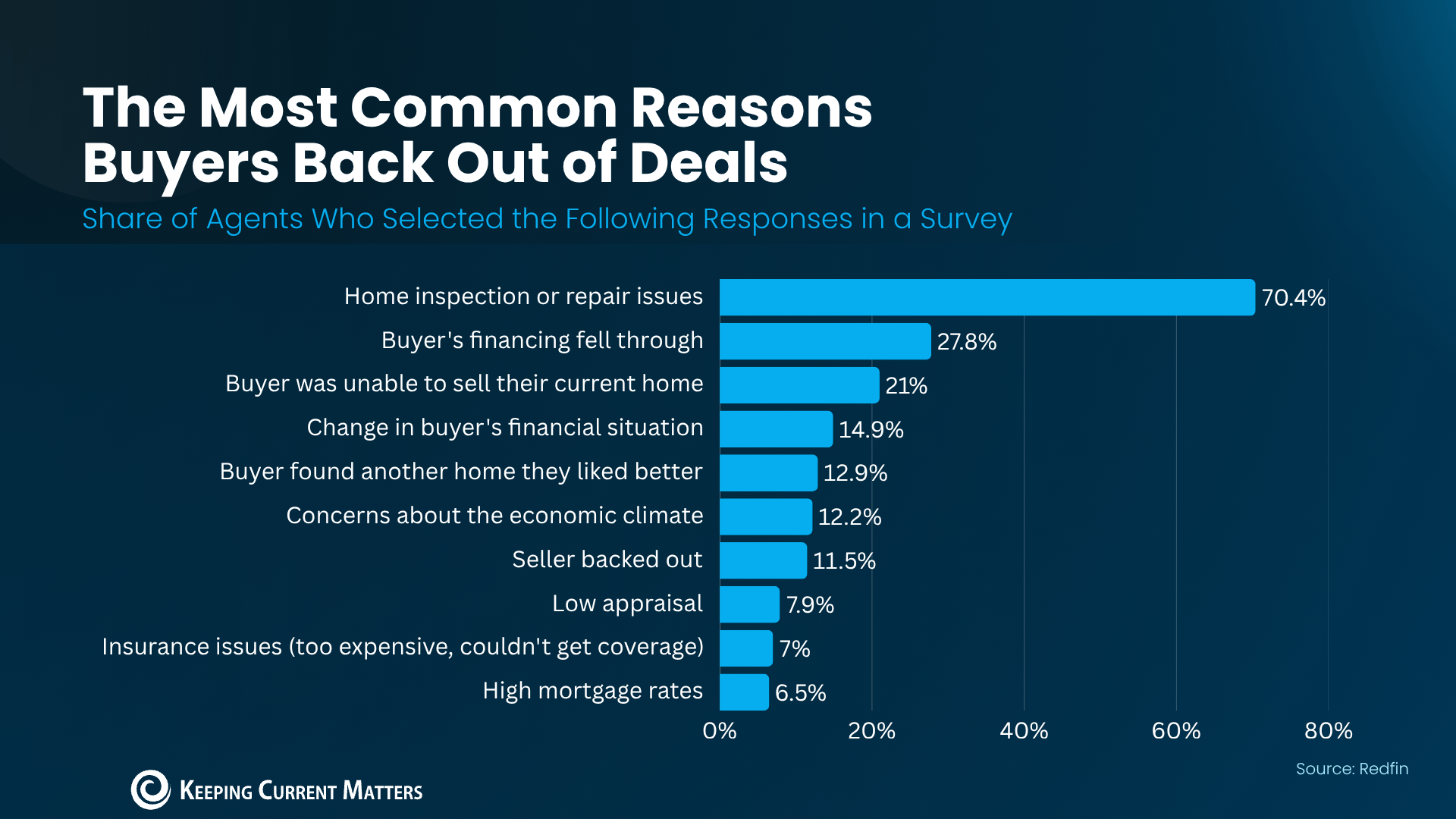
This is the big one. And the good news? It’s also one of the areas where you can be the most proactive.
One simple way to head this off is by getting a pre-listing inspection before your house goes on the market. That way, if something needs attention, you can decide whether to fix it upfront (before you sell), adjust your price, or disclose it and come in already prepared for what’s likely to pop up in negotiations. It’s a lot better to find the skeletons in the closet before a buyer does.
Even buyers who are pre-approved can run into financing issues before closing. And with mortgage rates putting extra pressure on affordability, some buyers are finding it harder to make the numbers work.
While you can’t control whether a buyer’s loan goes through, you can work with your agent to look closely at their financing before accepting an offer. And if affordability is the concern, your agent can help you explore whether incentives like closing cost credits or a mortgage-rate buydown could make a difference.
Sometimes, your buyer needs to sell their house before they can buy yours. And if their sale falls through, yours could be affected too.
That’s why it’s important to understand any home-sale contingencies before accepting an offer. Your agent can help you look at where the buyer is in their own selling process and what protections you may want in place.
The goal isn’t to eliminate every possible risk. It’s to avoid being caught off guard by the ones you can plan for.
Just remember when you read headlines about canceled deals, they don’t give you the full picture. Most home sales still make it to closing.
And if a sale does fall through, that doesn’t automatically mean your house won’t sell. Sometimes a buyer’s circumstances change. Sometimes an issue comes up that can be addressed before the next offer.
What matters is having an agent who knows how to spot potential problems early, help you navigate negotiations, and keep your sale moving forward.
Because while you can’t control every twist and turn, you can control how prepared you are.
There's no need to let the fear of a buyer backing out hold you back. While no sale comes with guarantees, a little preparation upfront can go a long way toward making the whole process smoother.
If you're ready to make a move, let’s chat about whether a pre-listing inspection makes sense for you.
Source: Keeping Current Matters
The information contained, and the opinions expressed, in this article are not intended to be construed as investment advice. Keeping Current Matters, Inc. does not guarantee or warrant the accuracy or completeness of the information or opinions contained herein. Nothing herein should be construed as investment advice. You should always conduct your own research and due diligence and obtain professional advice before making any investment decision. Keeping Current Matters, Inc. will not be liable for any loss or damage caused by your reliance on the information or opinions contained herein.
Keeping Current Matters is a trademark of Keeping Current Matters, Inc. CrossCountry Mortgage, LLC; its subsidiaries; and its affiliates have not been authorized, sponsored, or otherwise approved by Keeping Current Matters, Inc. or any of the above-mentioned companies.