

Blog Post
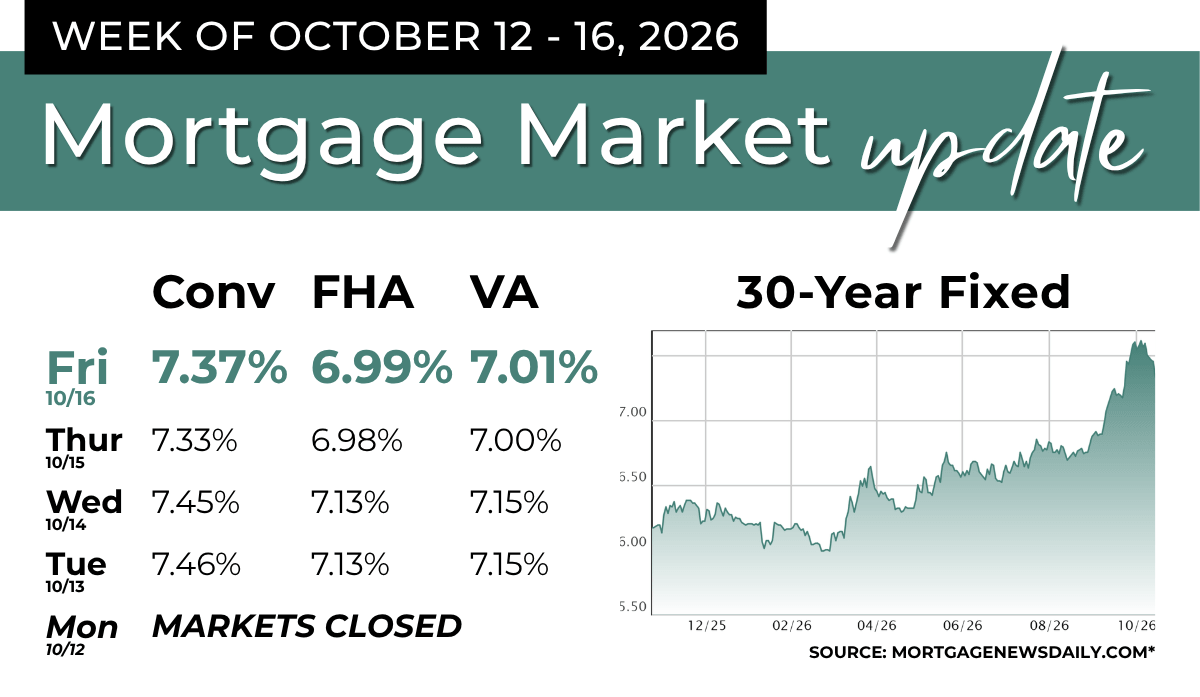
Mortgage rates moved lower this week, even with some difficult economic news along the way.
Meanwhile, homes are taking a little longer to sell nationally. That could give buyers more room to negotiate on certain properties.
If you're planning to buy soon, start with the monthly payment that works for you. Then find out whether a seller credit could help with closing costs or a lower rate.
Get in touch, and we'll show you how today's rates and a seller credit could change your payment.
Rate Source: MortgageNewsDaily.com
*The Mortgage News Daily index attempts to capture the most prevalently quoted conventional, FHA, and VA 30-year fixed rates for highly qualified homebuyers that meet the appropriate down payment requirements and have no major loan-level price adjustments.
Mortgage News Daily is a trademark of Mortgage News Daily, LLC. CrossCountry Mortgage, LLC; its subsidiaries; and its affiliates have not been authorized, sponsored, or otherwise approved by Mortgage News Daily, LLC or any of the above-mentioned companies.


