Blog Post
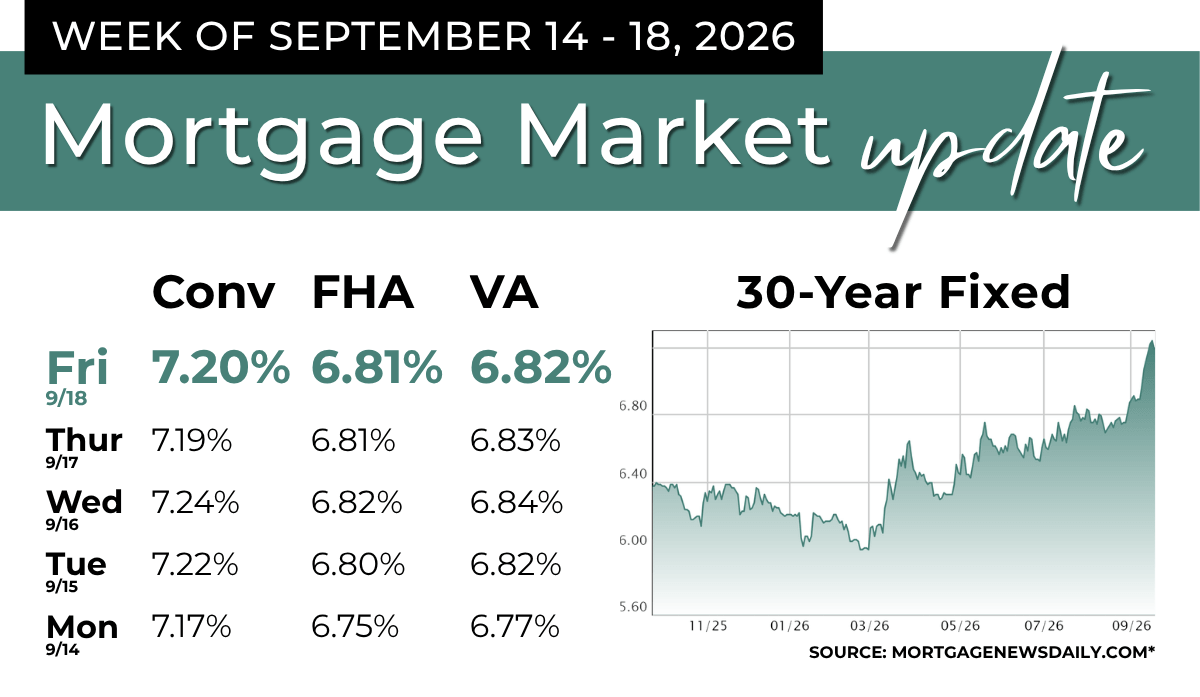
A Fed rate hike can sound like a clear signal for mortgage rates. This week was a good reminder it’s not that simple.
Mortgage rates moved higher heading into Wednesday. By Thursday, they had eased back close to where they started the week. One Fed decision doesn’t tell homebuyers exactly where mortgage rates go next.
Higher rates are slowing buyer activity, and builders are pulling back too. That may mean less competition on certain homes today, and waiting doesn’t guarantee a much bigger selection later.
If buying is on your radar, focus on what you can control. Know the payment range that works for you, keep your pre-approval current, and be ready if rates improve or the right home appears.
Need to update your numbers? Send us a message, and we’ll help you see what works today.
Rate Source: MortgageNewsDaily.com
*The Mortgage News Daily index attempts to capture the most prevalently quoted conventional, FHA, and VA 30-year fixed rates for highly qualified homebuyers that meet the appropriate down payment requirements and have no major loan-level price adjustments.
Mortgage News Daily is a trademark of Mortgage News Daily, LLC. CrossCountry Mortgage, LLC; its subsidiaries; and its affiliates have not been authorized, sponsored, or otherwise approved by Mortgage News Daily, LLC or any of the above-mentioned companies.